
Latest criminalization, incarceration, and democracy updates Feb 23, 2026

Top reads: Neighbors are defending neighbors in Minneapolis; Temp agencies are churning through formerly incarcerated workers, exploiting their vulnerability with low pay and no protections; there are no quick fixes for fascism; a riveting account of the 1973 Walpole prison uprising, where prisoners ran the facility following a guard strike and kept a calm and violence-free environment for three months.
Media
Emily Galvin-Almanza’s debut book The Price of Mercy is out!
Radley Balko lays down the facts on how ICE became so violent in this 25 min podcast.
The Alabama Solution was nominated for an Oscar, which is absolutely momentous. If you still haven’t seen this documentary, please check it out on HBO. This is not some talking heads learning opportunity. It’s a thriller filled with contraband footage. Don’t miss it!
Rashad Robinson has a new media discussion project called Freedom Table. Here’s an episode talking about how media narratives shape our perceptions of justice and power.
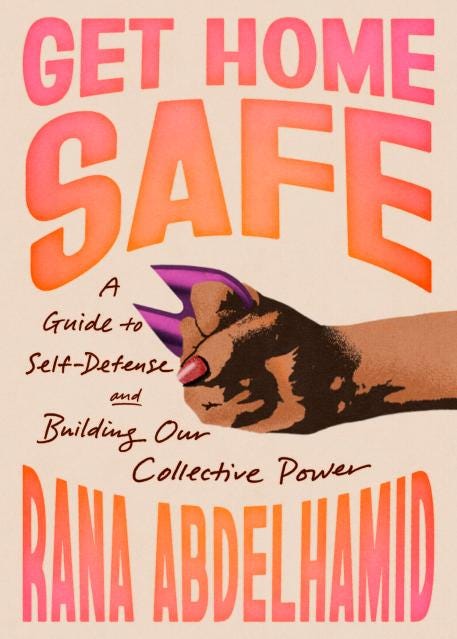
Rana Abdelhamid has a fantastic book out called Get Home Safe: A Guide to Self-Defense and Building Our Collective Power, drawing on her years of work training and organizing women. Here is her recent oped in the New York Times and here she is on Gayle King.
The 10th Anniversary edition of This is an Uprising is out, with a new preface and afterward that reflects on key developments in the field of civil resistance.
I’ve been recommended a podcast called Running from COPS about the impact of the show COPS on American policing. I haven’t listened yet but apparently it’s illuminating.
Marbré Stahly-Butts and Ameca Reali teamed up to compile and edit the new book Lawyering for Liberation: a Toolbox for Movement Lawyers.
Dr. Kenneth Glasgow, who has spent years in prison and years fighting to help people in prison in Alabama and beyond, has a new book out called Freedom Fighters.
Dwayne Betts, creator of Freedom Reads, joined the Dog Talk podcast to talk about books in prison (plus some discussion of his pandemic puppy).
Solutions and Wins
Outgoing New Jersey Governor Phil Murphy announced one of his final executive actions: restoring the eligibility to serve on juries for some 350,000 people who’d been blocked due to prior criminal convictions.
The Massachusetts Survivors Act would allow for reduced sentences for people with convictions related to their abuse.
A Canadian company declined to sell a 550,000 square ft warehouse in Virginia to DHS after protests and advocacy apprised them that it would be used to detain immigrants.
Governor Hochul has backed off of efforts to roll back NY’s “raise the age law” (which returned 16 and 17 year olds to youth court instead of adult prison), after 200 groups warned they would fight to the mat to keep it. In an election year, that’s not a fight she wants to pick.
Between 2021 and 2025, when supposedly criminal justice reform was tanking, 652 bipartisan CJ reform laws passed in the states, including 114 laws in 36 states last year (more than in 2024). This data comes from bill tracking research done by students at Princeton under Udi Ofer.
ICE Notes
ICE is now the largest law enforcement agency in the country and ICE detention is slated to triple in size, matching the scale of Japanese internment. I highly recommend reading Silky Shah’s overview of these developments, which emphasizes the many years of bipartisan collaboration that has made this horrific apparatus possible. With this type of history, increasing professionalization will not make ICE policing less violent. So why are democratic leaders in the Senate pushing these reforms as consequential?
How does this relate to criminal justice? Remember that “Militarized borders and heavily gated pathways to citizenship ensure a permanently exploitable class, much like felony convictions.” Moreover, there’s a strong continuum between the murder of Renee Good within the long US history of police murders. The NYTimes calls ICE a “violent and unaccountable domestic police force.” (Balko said it first). And most importantly, the massive expansion of ‘detention’ beds, which a federal court of appeals just said can hold people indefinitely, should absolutely concern anyone who’s been fighting to close prisons and jails. On the bright side, this field has considerable experience campaigning to close prisons and jails. One of the most important things to do right now is to ramp up those campaign strategies for this new terrain.
Massachusetts, bastion of liberty and democratic resistance, is collaborating with ICE. Bolts Magazine has an excellent exposé of the state’s disgraceful contract.
Out of Minneapolis: A bounty of stories and commentary from Minnesotans living through and protect each other from a violent federal siege; Margaret Killjoy visited Minneapolis and reports back; Jonathan Stegall and Anne Kosseff-Jones reflect on how abolition shows up in the current moment of anti-ICE mobilization there; Erin West gives a personal account of what it feels like to confront federal agents in the streets alongside an entire city: “Ice vs. Everyone.”
The number of children in ICE detention has jumped by 6x. Pro Publica published heartbreaking letters from children in detention.
Conditions are horrendous inside these detention centers, with rampant medical neglect.
Commentary and Analysis
I highly recommend reading this beautiful essay, One Minute Remaining, by Shebri Dillon, who writes about her experience as an incarcerated mother.
Niskanen, a centrist policy think tank, argues compellingly that incarcerating people for longer based on prior convictions makes no sense. This digs into the differences between age cohorts and arrest levels. Long story short, Gen Xers were much more likely to be arrested when they were young than following generations, and policy has not updated to account for this change.
Baz Dreisinger and Alexus McNally describe the prison building boom in the Global South, heavily influenced and funded (!) by the U.S. and Europe, which is wildly detrimental.
The Marshall Project recounts bad trends at the DOJ, including: changing priorities away from addressing police misconduct and community violence (cutting billions of dollars from effective programs) to expanding gun rights; completely corrupting the pardons process (donors get out of jail); and pressing for increased use of the death penalty. PPI is also collecting receipts.
Bolts reports on what’s at stake in sheriff and prosecution elections this year.
Reports, tools, and research
FWD.us has released a very readable and useful report on parole, with stories, data, and recommendations. Denying parole is bad for public safety.
Jeff Asher does a thorough debunking of the claim that the recent dramatic decline in murder rates was caused by improved hospital care keeping more people alive. It’s not true!
The Bail Project did a wonky report on bail policy reforms, with guidance for advocates.
The Prison Policy Initiative found that over half a million jail bookings a year are for ‘failure to appear’, which is nuts. That’s 1 in 8 bookings!
Former police officers and DAs turned judges are more likely to detain people and set higher bail. Researchers estimate that replacing one of these judges with an average judge would result in: 65 fewer detentions, $6 million less in imposed cash bail, 17 years less jail time, and would save about $8.7 million in detention costs over 10 years.
PPI did a roundup of police misconduct data projects, of which there are many.
Specialty courts don’t work very well at all.
Thanks so much! Is there a link for the Princeton bill tracking work?
Thank you